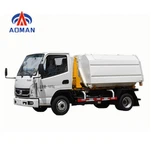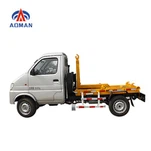


Road sweepers, also known as street sweeping vehicles, are specialized equipment designed for comprehensive road cleaning, garbage recovery, and transportation . They are indispensable in maintaining urban sanitation, reducing dust pollution, and prolonging the life of road surfaces. You can find them working on city streets, highways, airports, squares, and residential areas .
There are several primary classification methods for road sweepers, based on their operational principles, mobility, and dust control methods .
1. Classification by Operation Mode
This is the most fundamental classification, directly relating to the vehicle's working principle and cleaning effectiveness.
Pure Sweeping Type: This type relies primarily on the mechanical action of rotating disc brushes or cylindrical brushes to dislodge debris. The brushes then throw the garbage onto a conveyor belt or directly into the collection hopper . It is effective for larger particulate matter and blocky garbage but has a relatively lower removal rate for fine dust .
Suction-Sweeping Type: This type combines mechanical brushing with negative pressure suction. The side brushes gather debris from corners and curbs towards the front of the suction nozzle. Then, a powerful fan generates a strong airflow that sucks the garbage and dust into the waste container . This method offers a wider cleaning range, better adaptability, and superior performance in collecting fine particles .
Pure Suction Type: Often hailed as a high-tech product that eliminates "secondary dust pollution" . It does away with traditional brushes entirely and relies solely on aerodynamic principles for operation . Using a negative pressure pure suction principle, it utilizes airflow to direct dust and garbage into the storage bin . Its cleaning efficiency can exceed 98%, making it highly suitable for dusty industrial plants and high-class roads .
2. Classification by Mobility
This categorization is based on how the sweeper moves and is powered.
Walk-Behind and Hand-Guided Sweepers: These are compact machines ideal for narrow spaces like sidewalks, pedestrian zones, and internal pathways within communities .
Self-Propelled Sweepers: These vehicles possess their own independent power source (fuel or electric) and are highly mobile and efficient. They form the backbone of municipal road cleaning operations .
Trailer-Type Sweepers: These units lack their own propulsion and must be towed by another vehicle. They are simpler in structure and have lower manufacturing costs, but their overall integrity and operational efficiency are comparatively lower .
3. Classification by Dust Suppression Method
This classification focuses on how the sweeper controls dust during the cleaning process.
Dry Sweepers: These operate without using water, relying entirely on aerodynamic principles and air flow . They employ high-efficiency dust filtration systems, such as multiple filter cartridges, to trap and separate dust particles. This effectively prevents both primary and secondary dust pollution, making them particularly suited for water-scarce regions or locations with stringent dust control requirements .
Wet Sweepers: These are equipped with water spraying systems that dampen the debris during sweeping to suppress dust . This is a more traditional and common approach, although using water can pose challenges in extremely cold climates where freezing is a concern .
Furthermore, with ongoing technological advancements, New Energy Sweepers (such as pure electric models) and Multi-Functional Wash-Sweepers (which combine sweeping with high-pressure washing) are emerging as industry trends. These models are more environmentally friendly, energy-efficient, and capable of handling more complex cleaning demands