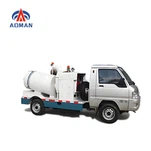


As key transportation vehicles in the energy supply chain, gasoline transport trucks' maximum cargo capacity design exerts a significant impact on transportation efficiency, safety compliance, and operational costs. Given the substantial differences in regulatory frameworks, technical standards, and transportation demands across countries and regions, the cargo capacity specifications of gasoline transport trucks exhibit distinct regional characteristics. Drawing on international industry practices, this paper systematically analyzes the key factors influencing the maximum cargo capacity of gasoline transport trucks, outlines typical cargo capacity ranges, and compares the distinctive features of major global markets-aiming to provide a reference for cross-border logistics planning and procurement decision-making.
I. Definition of Maximum Load Capacity and Analysis of Core Influencing Factors
The maximum load capacity of a gasoline transport truck refers to the maximum volume of gasoline the vehicle can carry in strict compliance with international safety standards, typically measured in liters (L) or gallons (gal). Determining this parameter requires striking a dynamic balance between optimizing transportation efficiency and controlling risks. It is mainly influenced by the following factors:
Vehicle Type and Functional Compatibility
Light-Duty Transport Units: Specifically designed for urban short-distance logistics scenarios, these units have a small-to-medium cargo capacity to meet the demands of frequent, small-batch distribution.
Heavy-Duty Transport Platforms: Built to address the specialized needs of cross-regional long-distance transportation or material distribution in remote areas, these platforms feature large-capacity tank designs that deliver significantly enhanced load capacity.
Special Modified Vehicles: For specialized application scenarios such as construction sites, these vehicles can be fitted with modular auxiliary fuel tank systems to achieve flexible expansion of cargo capacity.
Regulations and Safety Supervision Framework
The international road transport system has established strict technical specifications for vehicle design, with the core objective of ensuring transportation stability and systematically preventing overloading risks. For example, the European Union implements dual supervision of fuel tank sealing performance and explosion-proof devices through the ISO standardization system; the North American market, meanwhile, places greater emphasis on compliance certification related to the Anti-Knock Index (AKI) and strengthens full-process control over transportation safety.
Power System and Route Compatibility
There are significant differences in energy efficiency between diesel-powered and gasoline-powered transport trucks, which directly influences the differentiated design of their cargo capacity configurations. In mountainous areas or regions with sparsely distributed gas stations, it is necessary to increase fuel tank capacity to optimize transportation efficiency and reduce the frequency of mid-route refueling.
Manufacturers and customization: Brands offer options ranging from standard configurations to customized solutions-such as installing separate compartments to transport different types of fuel.
II.Typical Capacity Ranges and Global Application Scenario Analysis
The capacity configuration of gasoline transport trucks exhibits distinct gradient characteristics. Based on transportation demands and scenario adaptability, it is mainly divided into the following three typical ranges:
Light-Duty Delivery VehiclesCapacity ranges from 60 to 200 liters. These vehicles are specifically designed for urban short-distance logistics scenarios, boasting excellent road passability and fuel efficiency while meeting the mandatory low-emission requirements of environmental regulations.
Heavy-Duty Transportation Vehicles
Capacity ranges from 200 to 5,000 liters, suitable for intercity trunk line transportation and industrial energy supply scenarios. For example, China's mainstream 4×2 gasoline transport trucks feature 4,000–5,000-liter modular cargo tanks with a compartmentalized design. Equipped with a multi-fuel compatible intelligent pumping system, they enable independent loading and unloading of different fuel types.
Ultra-Heavy-Duty Special Vehicles
With a capacity exceeding 5,000 liters, these vehicles mainly serve the fuel supply needs of cross-border long-distance freight and large-scale infrastructure projects. Such vehicles must strictly comply with international safety standards (e.g., the IMDG Code-International Maritime Dangerous Goods Code) and pass professional certifications for structural strength, leak-proof devices, and emergency response systems.
III. International Search Habits and Keyword Optimization
When foreign users search for such information, they typically focus on the following keywords and techniques:
Core terms: e.g., "gasoline transport truck capacity", "maximum fuel tank size for gasoline transport trucks".
Refined searches: Incorporate vehicle type (e.g., "heavy-duty gasoline transport truck") or purpose (e.g., "long-distance gasoline transportation").
Safety and compliance: Search for "gasoline transport truck capacity regulations" or "gasoline transportation safety standards", with emphasis on explosion prevention, leakage prevention, and emergency response.
International standards: Use terms like "ISO fuel tank specifications" or "global transport vehicle guidelines" to obtain authoritative data.
IV.Global Market Differences and Industry Evolution Trends
Driven by variations in regional regulatory frameworks and market demand characteristics, the capacity design of gasoline transport trucks worldwide exhibits a distinct differentiated pattern:
Mature European and American Markets: Focused on environmental protection and energy efficiency enhancement, capacity allocation features moderate intensification. Technological development centers on the collaborative innovation of low-emission power systems and explosion-proof safety devices. For instance, in the European market, gasoline quality is graded by the Research Octane Number (RON), and this standard system imposes higher requirements for cleanliness control of transportation containers.
Emerging Asian Markets: In rapidly developing economies such as China and India, infrastructure construction and logistics network expansion have generated strong demand for heavy-duty transportation equipment. To meet the needs of frequent, large-capacity logistics turnover, heavy-duty models have become the mainstream market choice.
Industry Innovation Directions: Currently, the industry is in a critical phase of transitioning from scale expansion to quality and efficiency improvement. Through the in-depth integration of lightweight material applications and intelligent scheduling systems, it aims to achieve the coordinated development of transportation cost optimization and energy efficiency enhancement.