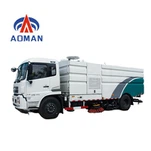


As a core piece of equipment in the hazardous materials transportation system, the dimensional parameters of tankers are strictly designed in compliance with industry standards. Key indicators such as length, width, height, and wheelbase collectively determine the safety and operational efficiency of the transportation process. These metrics collectively determine a tanker's cargo capacity, maneuverability, and operational stability. This paper provides a detailed analysis of tanker truck dimensions and their practical implications for the industry.
I. Analysis of Core Dimension Parameters
The length of oil tankers generally ranges from 6.9 meters to 12 meters. A typical model-the Dongfeng Furica mobile refueling truck-features a compact 6.9-meter design, while larger semi-trailer variants can extend up to 12 meters. While a longer length increases cargo capacity, it also correspondingly reduces maneuverability in narrow road sections.
In terms of width, the industry standard range is set between 2.4 meters and 2.5 meters. Take the Foton Auman chassis-based tanker as an example: its 2.49-meter body width not only improves driving stability but also ensures strict compliance with the width restrictions for urban roads.
HeightCommon tanker heights range from 2.7 meters to 3.2 meters. The Dongfeng Dolica model, for example, stands at 3.05 meters tall. A lower profile lowers the vehicle's center of gravity, thereby reducing the risk of rollover during transit.
WheelbaseWheelbase affects turning radius and load distribution. Mid-sized tankers typically have a wheelbase of 3.8 meters to 5 meters, while heavy-duty semi-trailer tankers can have a wheelbase exceeding 10 meters. A well-optimized wheelbase design balances load distribution and enhances ride comfort for long-haul transportation.
II. The size of an oil tanker has a significant impact on its performance, primarily reflected in the balance between loading capacity and transportation efficiency:
Loading Capacity and Transportation Efficiency
Tank volumes range from 5 cubic meters (approximately 5,000 liters) to 25 cubic meters (approximately 25,000 liters). Increasing the tank volume can enhance single-trip load capacity, but the chassis structure must be strengthened simultaneously to avoid the risk of overloading. In typical application scenarios, a 10-cubic-meter tank is suitable for short-to-medium-distance delivery needs, while tanks with a capacity of 20 cubic meters or more are specifically designed for interprovincial trunk transportation, reducing unit transportation costs through economies of scale.
Driving Stability
Dimension design must account for weight distribution. The dimensional characteristics of oil tankers directly affect their operational efficiency: Due to their large volume and weight, full-size tankers tend to experience increased tire wear and longer braking distances; in contrast, compact models significantly improve maneuverability in urban road conditions. Modern manufacturing technologies, by adopting lightweight materials such as aluminum alloys, have optimized energy efficiency while ensuring load-carrying capacity.
In terms of adaptability to complex terrains, small oil tankers (approximately 6 meters in length) demonstrate excellent off-road capability, making them particularly suitable for special scenarios such as construction sites or mountainous areas. In contrast, large semi-trailer tankers are constrained by road conditions and are only suitable for efficient operation on major highways in the national road network.
III. Industry Application Scenarios and Dimension Selection
Diverse transportation requirements drive the design of tankers with differentiated dimensions:
Urban Delivery
Small tankers with lengths of 6–8 meters (e.g., the Foton Auvil model) are widely used for gas station resupplies and on-site mobile refueling at construction sites, as they strike an optimal balance between mobility and operational efficiency.
Special Medium Transportation Solutions
To meet the specific transportation requirements of chemicals or food-grade liquids, custom-sized tankers have become an essential choice. For instance, the elliptical tank design effectively reduces fluid sloshing during transportation by optimizing fluid dynamics, while also complying with the hygiene requirements for food-grade transportation.
IV. Technical Trends and Future ProspectsDriven by the shift toward an intelligent and green industry, oil tanker design is undergoing systematic innovation, focusing on the following three key technical directions:
New Energy Power Innovation
Electric tankers significantly extend their range through wheelbase optimization and battery pack spatial reconfiguration. Take the fully electric model planned for launch in 2025 as an example: its extended 4.2-meter wheelbase, combined with a distributed battery layout, enables a range of over 200 kilometers, meeting the medium- and short-distance transportation needs within urban agglomerations.
Lightweight Materials Breakthrough
Advanced materials such as carbon fiber-reinforced composites are accelerating their penetration in tank manufacturing, achieving weight reduction while maintaining structural strength. Industry forecasts indicate that by 2026, the application ratio of such lightweight materials will exceed 28%, driving a steady decline in unit transportation energy consumption.
Intelligent Driving Integration
Level 3 (L3) autonomous driving technology is gradually being applied to trunk line transportation scenarios. Through intelligent dispatching systems, dynamic matching between vehicle size and transportation routes can be achieved. For instance, the system can automatically plan routes suitable for different tank volumes, thereby improving overall logistics efficiency by 15% to 20%.