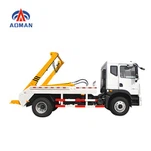


The cleaning operation of a washing and sweeping vehicle is a continuous process involving the precise coordination of multiple systems, where each step is intricately linked. Its workflow can be broken down into several core stages, which fully demonstrate the sophistication of its engineering design.
The first stage is pre-flushing and wetting. Before the vehicle begins its main operation, multiple high-pressure nozzles located at the front underside or sides spray high-intensity, low-volume water jets onto the road surface. These jets possess strong kinetic energy, capable of penetrating and disintegrating dust, sludge, and oil stains firmly adhered to the pavement. Simultaneously, the water flow serves to wet the road surface, preventing dust from becoming airborne during subsequent sweeping. This stage is the foundation of the entire deep cleaning process.
The next stage is debris sweeping and gathering. Following the high-pressure water flush, the disc-shaped side brushes (also known as "sweeping disks") installed on both sides of the vehicle immediately activate. They adjust their angles precisely to follow the contour of the curb, rotating inward to sweep debris, gravel, and the dislodged contaminants from the curb edges and a wider area towards the central area under the vehicle's chassis. At the same time, the main horizontal roller brush (or "main sweeper") located in the middle of the chassis begins to rotate at high speed. It is responsible for further scrubbing the road surface and gathering the debris swept in by the side brushes into a concentrated debris strip.
The following stage is the most critical: debris and sewage recovery. Behind the horizontal roller brush, and closely following the road surface, is a wide device called the "suction pan" or "suction mouth." This is connected to a high-power centrifugal fan driven by the auxiliary engine. When the fan operates, it creates a powerful negative pressure (vacuum effect) inside the suction pan. This negative pressure zone acts like a giant vacuum cleaner head, sucking up the mixture of gathered debris, water, and air from the previous steps at high velocity into the internal sewage tank. To separate the air from the solid/liquid matter, the sewage tank is equipped with air-water separation baffles and fine filters. The cleaned air is expelled, while the sewage and debris are retained inside the tank.
The final stage involves water circulation and waste disposal. After the operation is complete, the vehicle proceeds to a designated site and unloads the waste from the sewage tank into a waste collection point or sewer network via a lifting mechanism. More advanced washing and sweeping vehicles are equipped with water recycling systems that can sediment, filter, and purify the collected sewage, allowing the cleaned water to be reused for road flushing, which significantly conserves water resources.