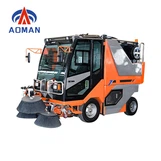

When it comes to maintaining clean and tidy roads, a road sweeping truck plays a pivotal role. As a dedicated road sweeping truck supplier, I understand the significance of these vehicles in keeping our streets, highways, and public areas clean. In this blog, I will delve into the technical parameters of a road sweeping truck, which are crucial for potential buyers to make informed decisions.
Vehicle Chassis
The chassis is the foundation of any road sweeping truck. It provides the structural support and determines the vehicle's overall stability and load - bearing capacity. Most road sweeping trucks are built on well - known commercial vehicle chassis, such as those from leading manufacturers. The chassis should have a suitable wheelbase, which affects the turning radius of the truck. A shorter wheelbase allows for better maneuverability in tight spaces, such as narrow streets and alleys, while a longer wheelbase can provide more stability at higher speeds on highways.
The gross vehicle weight rating (GVWR) of the chassis is another important parameter. It indicates the maximum weight that the vehicle can safely carry, including the weight of the truck itself, the sweeping equipment, water tanks (if applicable), and the collected debris. A higher GVWR means the truck can carry more debris without overloading, reducing the frequency of trips to the dump site.
Sweeping System
The heart of a road sweeping truck is its sweeping system. There are several types of sweeping systems, including mechanical broom sweepers, vacuum sweepers, and combination sweepers.
Mechanical Broom Sweepers
Mechanical broom sweepers use rotating brushes to sweep debris from the road surface into a collection hopper. The diameter and number of the brushes are important parameters. Larger - diameter brushes can cover a wider area with each rotation, increasing the sweeping efficiency. The number of brushes also affects the coverage and effectiveness of the sweeping. For example, some mechanical broom sweepers may have multiple side brushes in addition to the main central brush, which can sweep debris from the edges of the road towards the center for collection.


The speed of the brush rotation is also crucial. A higher rotation speed can generate more force to dislodge stubborn debris from the road surface, but it may also cause excessive wear on the brushes. Therefore, a balance needs to be struck between the rotation speed and the brush's lifespan.
Vacuum Sweepers
Vacuum sweepers rely on powerful suction to collect debris. The suction power is measured in terms of air volume and pressure. A higher air volume means more air can be drawn into the system, which is beneficial for collecting large - volume debris. The pressure determines the ability to pick up heavier and more firmly - attached debris.
The size and design of the suction nozzle also play a significant role. A wider suction nozzle can cover a larger area during the sweeping process, improving the efficiency. Additionally, some vacuum sweepers are equipped with adjustable suction nozzles, which can be adjusted according to the road conditions and the type of debris.
Combination Sweepers
Combination sweepers combine the features of mechanical broom sweepers and vacuum sweepers. They use brushes to loosen the debris and then use the vacuum system to collect it. This type of sweeper is very effective in dealing with a wide range of debris, from fine dust to large stones.
Water System
Many road sweeping trucks are equipped with a water system. The water system serves multiple purposes, such as dust suppression and cleaning the sweeping brushes.
The capacity of the water tank is an important parameter. A larger water tank allows the truck to operate for a longer period without refilling. The water pump's flow rate and pressure are also crucial. A higher flow rate means more water can be sprayed in a shorter time, which is beneficial for dust suppression. The pressure determines the distance and coverage of the water spray.
The number and arrangement of the water nozzles also affect the effectiveness of the water system. Some trucks have nozzles located near the brushes to clean them, while others have nozzles on the front or side of the truck for dust suppression on the road surface.
Collection Hopper
The collection hopper is where the swept debris is stored. The volume of the collection hopper is a key parameter. A larger hopper can hold more debris, reducing the frequency of emptying. The hopper should also be designed in a way that allows for easy emptying. Some hoppers are equipped with hydraulic systems that can tilt the hopper to dump the debris.
The material of the hopper is also important. It should be strong and corrosion - resistant to withstand the weight and abrasion of the collected debris.
Control System
Modern road sweeping trucks are equipped with advanced control systems. The control system allows the operator to adjust various parameters, such as the speed of the brushes, the suction power, and the water spray. It can also provide real - time information about the operation of the truck, such as the level of the collection hopper and the water tank.
The control system can be either manual or automated. Automated control systems can improve the efficiency and accuracy of the sweeping process, as they can adjust the parameters based on the road conditions and the amount of debris.
Other Technical Parameters
- Engine Power: The engine power determines the truck's performance, including its speed and the ability to operate the sweeping equipment. A more powerful engine can provide sufficient power for the sweeping system and the vehicle's movement.
- Transmission: The type of transmission, such as manual or automatic, affects the ease of operation and the fuel efficiency of the truck.
- Tire Size and Type: The tire size and type can affect the truck's stability, traction, and fuel consumption. Larger tires may provide better stability, while specialized tires can improve traction on different road surfaces.
If you are in the market for a road sweeping truck, understanding these technical parameters is essential. We offer a wide range of road sweeping trucks, including Runway Sweeper Truck, Sweeping Vehicles, and Street Cleaner Truck. Our trucks are designed with the latest technology and high - quality components to ensure efficient and reliable operation.
If you are interested in purchasing a road sweeping truck or have any questions about our products, please feel free to contact us for further discussion and negotiation. We are committed to providing you with the best solutions for your road cleaning needs.
References
- Vehicle manufacturers' technical manuals
- Industry standards and regulations for road sweeping trucks