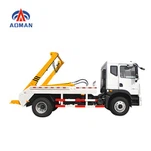


The compressors used in garbage trucks mainly fall into the following types:
Hydraulic compressors: These are the most commonly used compressors in garbage compactors. They rely on a hydraulic system, which uses the pressure of hydraulic oil to push pistons and compression plates, thereby compressing garbage. For example, side-mounted compression garbage trucks adopt a mechanical-electrical-hydraulic linkage control system, using filling devices, pushers, and other components to dump, crush, or flatten garbage. The garbage is then pushed into the truck and compacted. Rear-mounted compression garbage trucks also frequently use hydraulic compressors: they are equipped with a hydraulic push plate inside the truck, which can further compress garbage during loading and directly push and discharge it horizontally during unloading.
Mechanical compressors: These use mechanical structures to compress garbage-for instance, the movement of mechanical components such as cams and connecting rods drives the compression plate to compress garbage. Mechanical compressors have the advantages of a simple structure and low maintenance costs, but their compression force is typically smaller than that of hydraulic compressors.
Pneumatic compressors: These use the power generated by compressed air to drive compression components and compress garbage. This type of compressor is suitable for handling high-moisture-content garbage, but it consumes relatively more energy and is less commonly used in garbage compactors.